AI WEIWEI – "Enemies create heroes"
A recent conversation at Westminster Central Hall in London, organised by How To Academy, felt less like a public talk and more like a rare moment of unfiltered thinking. Throughout the evening, the exchange was marked by a quiet, disarming sense of humour—never performative, never cynical—that revealed Chinese artist Ai Weiwei’s profoundly down-to-earth approach. Even when addressing the most serious subjects, his tone remained measured, human, and unexpectedly warm.
In dialogue with journalist Stephen Sackur to present his latest book On Censorship, Ai Weiwei did not perform the role history has assigned him: the heroic dissident artist. Instead, he spoke with calm directness about censorship, power, and personal responsibility, often punctuating heavy truths with subtle irony. The effect was not to soften his message, but to make it more piercing.
For Weiwei, art is not something he does, but something inseparable from who he is. Creativity is not a career choice or a political strategy—it is a condition of existence. He does not claim influence, nor does he seem comfortable with it. Yet, through integrity, persistence, and an almost stubborn refusal to “play safe,” he demonstrates how art, when lived rather than declared, can quietly resist even the most sophisticated forms of control.
The conversation unfolded as an open and wide-ranging exchange, shaped by questions from Stephen Sackur and the audience alike. Together, they traced the contours of Weiwei’s thinking—from censorship and power to art, technology, and personal responsibility. The questions below reflect that collective dialogue, edited for clarity and continuity, while preserving the urgency and directness of his responses.
After ten years of exile, you were allowed back into China to see your mother. Why now?
People think this is about forgiveness or kindness. It’s not. There was no emotional reconciliation behind this decision—just an intelligence judgment. They calculated that allowing me back would not create a problem. Rights in China are never absolute; they are permissions. You accept the conditions, and you can return. That’s how it works.
You’ve said censorship today is more sophisticated than ever. How does it operate?
In the past, censorship was obvious. Today it’s much more refined. I cannot exercise in China because I respond to censorship. The system is designed to be quiet, efficient, and internalised. You don’t need to be punished anymore—you learn to limit yourself.
Is the West truly freer, or simply more complacent?
As long as the media is controlled by interests, freedom is an illusion. In the West—and in democratic societies in general—censorship is insidious rather than obvious, which makes it more dangerous. Narratives are shaped quietly, dissent softened, and uncomfortable truths sidelined. Control does not disappear; it becomes more polite. Reality becomes unacceptable, so people choose comfort instead. This is not a free world—it just looks like one.
Is all meaningful art necessarily political?
Not all art is political. But if art is relevant, then it is political. The moment art touches reality, it enters politics. That’s why I cannot sell my work in China. Relevance is always a threat to power. Oddly enough, it was precisely this reaction from the government that made my work matter on a global scale. By opposing it, they turned me into a relevant voice and, eventually, into a globally renowned artist. Had they simply ignored me, I might have remained unknown. That is the irony: more often than not, it is the enemy who creates the hero.
Has technology empowered individuals—or strengthened authoritarian control?
The promise of technology to create resistance remains largely unproven. Social media offers visibility, but also enables surveillance. Algorithms reward conformity and suppress complexity. Technology, instead of expanding human judgement, increasingly replaces it—eroding our right to doubt, to fail, and to correct ourselves.
In view of all that, are you optimistic about the future?
I wouldn’t say I’m optimistic. We are at a turning point, maybe close to a point of no return. Technology is being controlled and manipulated. The future is not very bright. But I insist on humanity. That insistence is the only position I can take.
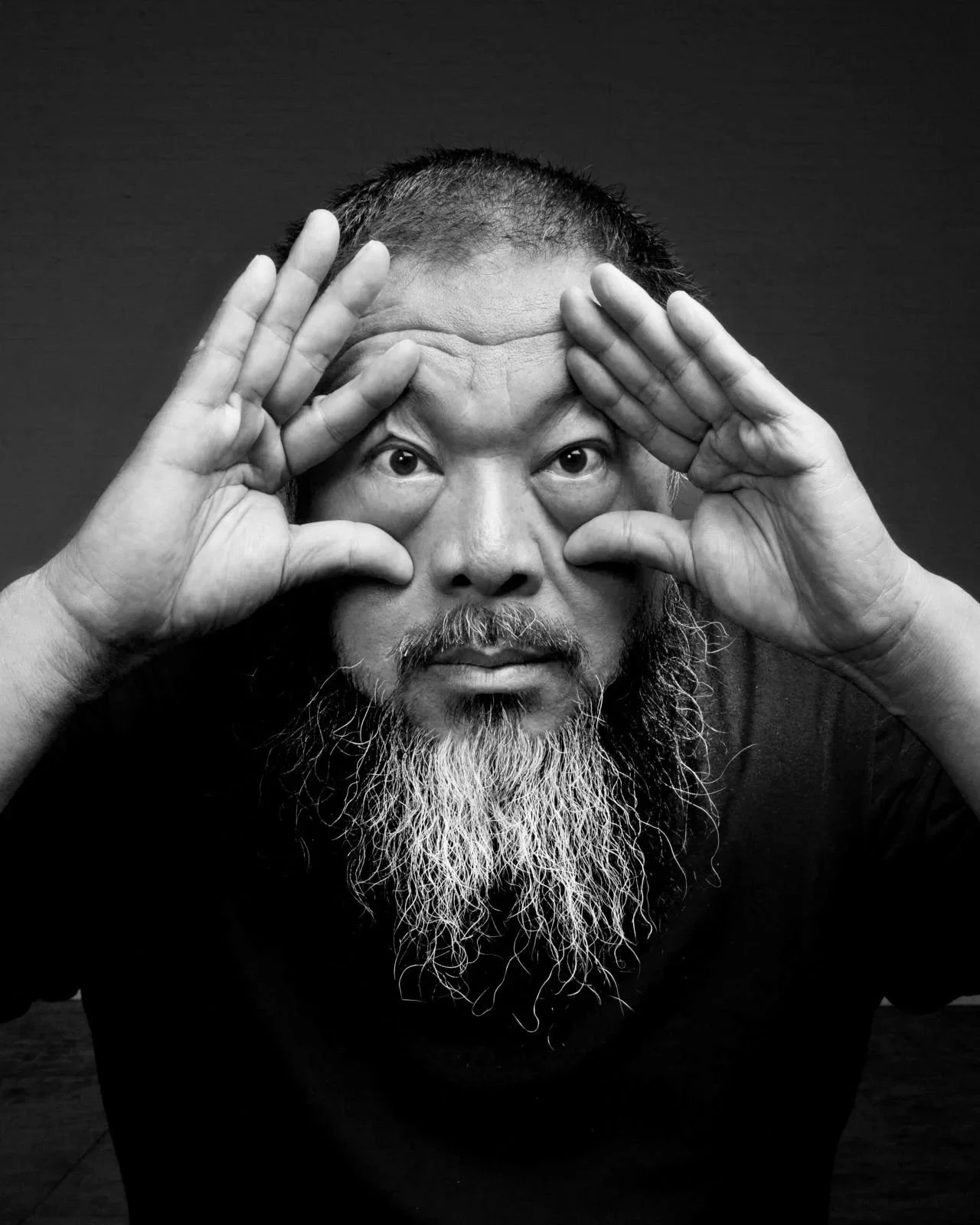
In the cover: Ai Weiwei © Ai Weiwei Studio
Images courtesy of How To Academy